Proxies and Filtering in a Traffic Stack: How MangoProxy Supports Stability Under Growing Load
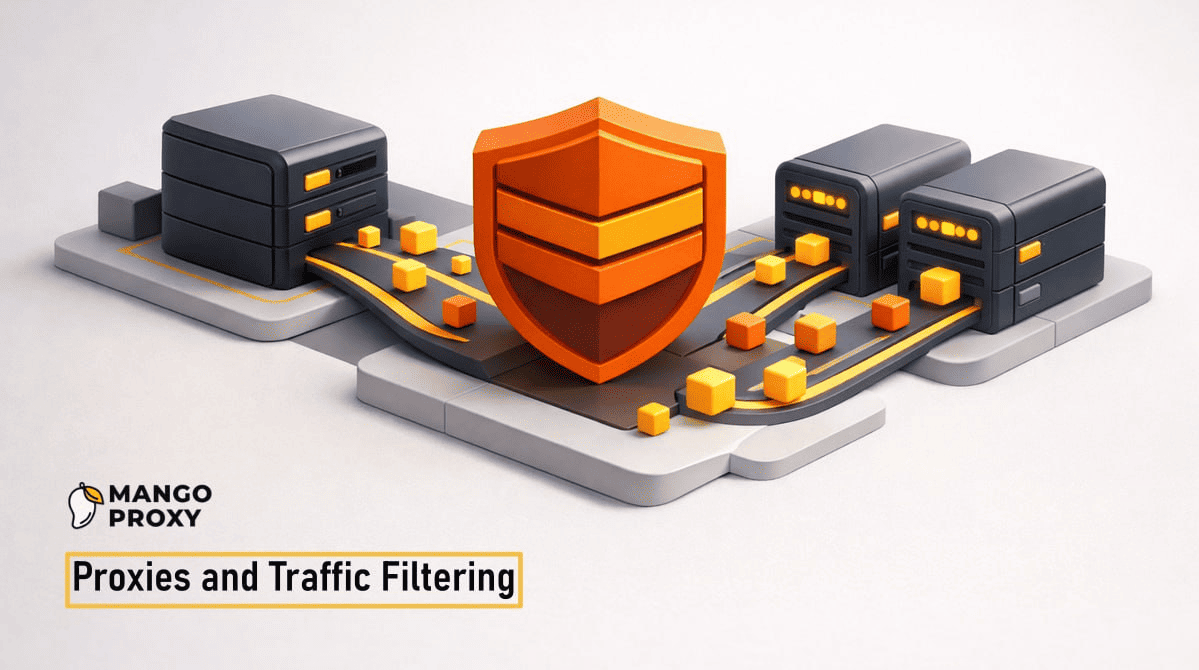
In test mode, almost any traffic setup looks stable. A small budget, a limited number of requests, a single traffic source - everything runs smoothly. Problems appear later. When volume increases, multiple regions are added, and load becomes constant. At that point it becomes clear that proxies, filtering, and traffic behavior are not auxiliary elements but a full network layer of the system. If this layer is built inconsistently, even a well-structured campaign logic begins to fail.
- What Is the Network Layer of a Traffic Stack
- The Role of MangoProxy in Traffic and Connectivity
- Proxy Types and Their Role in a Traffic Stack
- Pricing and Payment Model
- How Proxies and Filtering Work Together
- Common Mistakes When Traffic Grows
- MangoProxy in the Overall Structure
- Practical Conclusions
- Mini FAQ
- Conclusion
What Is the Network Layer of a Traffic Stack
If simplified, any traffic scheme consists of several levels:
- traffic source
- filtering
- proxies
- target resource
Filtering is responsible for analyzing and separating incoming traffic. Services like hoax.tech evaluate request characteristics and route traffic according to predefined logic - for example, distributing it across different scenarios depending on source or visit parameters. For affiliate marketers, this is critical at the stage where a decision is made about how a specific visit will be processed.
Proxies perform a different role - they define the network profile of the request: connection region, IP address, rotation format, and transmission method. When filtering and proxies operate in sync, the traffic distribution logic remains consistent: the request region matches the IP, sessions behave steadily, and load is distributed without sharp fluctuations.
This is why, when using filtering solutions, the network layer must be structured correctly. In such a setup, quality proxies complement the system, allowing filtering mechanisms to function without technical inconsistencies.
The Role of MangoProxy in Traffic and Connectivity
MangoProxy is a Residential, ISP, and Datacenter proxy service designed for professional tasks where connection stability, response speed, and flexible configuration matter.
The service includes:
- Residential proxies - dynamic
- ISP proxies - dynamic and static
- Datacenter proxies - dynamic and static
Connections are supported via HTTP and SOCKS5, and management is handled through a control panel and API.
When traffic volume grows, what matters is not simply the presence of IP addresses but how the pool behaves under real load. MangoProxy operates with a pool of 90+ million IP addresses, an average response time under 0.5 seconds, and 99.7%+ uptime. These factors influence how the system performs during long sessions and distributed request patterns.
Proxy Types and Their Role in a Traffic Stack
Residential - dynamic

Suitable for distributing traffic across a wide range of regions. Available in 200+ countries. Commonly used when geographic flexibility and IP rotation between sessions are required.
ISP - dynamic and static
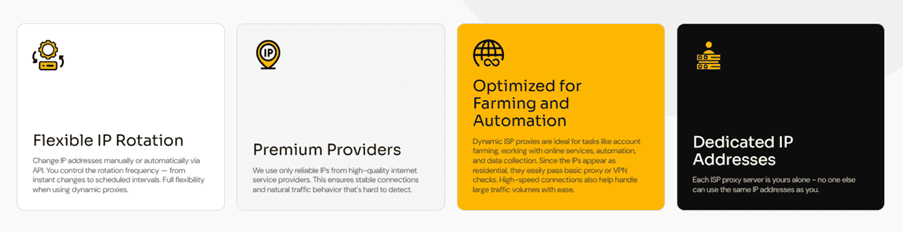
Combine characteristics of residential and server networks. Suitable for scenarios involving long sessions and repeated actions.
Datacenter - dynamic and static

Used for API work, automation, and high-volume request environments where connection stability and controlled load are important.
Pricing and Payment Model
The pricing model depends on proxy type:
- Residential - from $2.00 / GB
- ISP Dynamic - from $0.80 / GB
- Datacenter Dynamic - from $0.60 / GB
- ISP Static - from $2.9 / IP
- Datacenter Static - from $1.9 / IP
Traffic-based pricing fits dynamic workloads. Per-IP pricing suits long session use cases.
How Proxies and Filtering Work Together
It is important to understand that filtering and proxies do not replace each other. Filtering analyzes traffic, while proxies define the network profile of the request. If filtering routes a user to one region but proxies connect from another, inconsistencies appear.
As volume increases, these mismatches intensify:
- session counts grow
- rotation frequency increases
- load on the IP pool rises
Under such conditions, proxy stability becomes clearly visible.
Common Mistakes When Traffic Grows
- Using a single proxy type for all tasks
- Ignoring IP pool behavior under load
- Regional mismatch between filtering and connection
- Lack of API integration in automated environments
MangoProxy supports API access, allowing proxies to be integrated into automated systems without manual management.
MangoProxy in the Overall Structure
Within a traffic stack, MangoProxy serves as the network layer - handling connection logic, IP distribution, and connection stability. Filtering services analyze incoming flow, while proxies ensure correct request transmission. When properly configured, this reduces technical limitations and improves resilience as traffic volume increases.
Practical Conclusions
The network layer should not be treated as secondary. It directly affects session duration, integration stability, load distribution, and overall system behavior as traffic volume grows. Proxy selection should be based not on generic specifications but on concrete tasks: workload format, session length, regional structure, and automation level. This approach helps avoid technical issues under increasing load.
Mini FAQ
Can one proxy type be used for all tasks?
Not always. Different scenarios require different connection formats.
What matters more - speed or stability?
They work together. A fast but unstable proxy causes more issues than a slightly slower but consistent one.
Are proxies needed when using filtering tools?
Yes. Filtering does not define the network profile of the request.
Which proxy type is better for API usage?
Datacenter or ISP proxies are commonly chosen, depending on session duration.
Can proxies be managed via API?
Yes. MangoProxy provides both API access and a control panel.
Conclusion
The network layer is the foundation of any traffic stack. At low volumes, issues may go unnoticed, but under growing load they begin to affect the system as a whole. Proxies and filtering must operate in coordination to maintain stability across multiple regions, automation environments, and distributed traffic scenarios.